Finding the Right Water Softener: What to Compare Before You Buy
Hard water has a way of making itself known. Maybe it’s the white residue around your bathroom taps, the cloudy glasses that never look quite clean, or the stubborn scale building up inside your kettle. At first, these things seem like minor household annoyances. Over time, though, they can become a regular source of frustration.
A water softener can help reduce these problems, but choosing one isn’t as simple as picking the biggest model or the one with the most impressive features. Different households have different water conditions, usage patterns, and budgets. Understanding those differences can save you money and help you avoid buying equipment that doesn’t really suit your home.
Understanding What a Water Softener Actually Does
Hard water contains dissolved minerals, mainly calcium and magnesium. These minerals aren’t generally considered harmful at typical drinking-water concentrations, but they can leave deposits on plumbing fixtures, reduce soap lather, and contribute to scale buildup in water heaters and other appliances.
Related home guide: Making Everyday Life Easier With Reliable Hot and Cold Water Solutions →
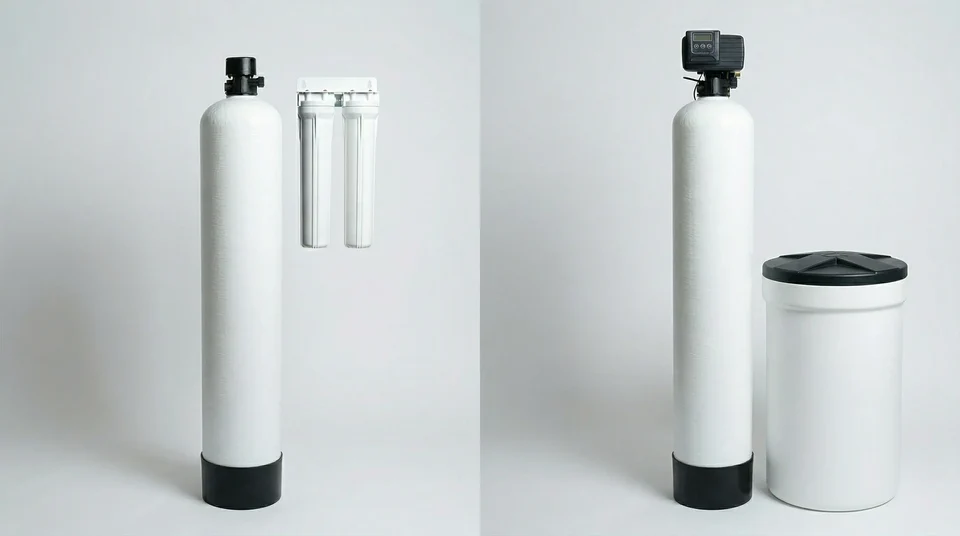
Traditional water softeners use a process called ion exchange. As hard water passes through a resin bed, calcium and magnesium ions are exchanged for sodium or potassium ions. The result is softer water that generally produces less scale and makes cleaning easier.
It’s worth knowing that softening isn’t the same as purification. A standard softener isn’t designed to remove bacteria, viruses, or every chemical contaminant. If your concern involves drinking water safety, you’ll need to consider appropriate testing and potentially separate treatment equipment.
Before shopping, determine whether hardness is actually the problem. A water test can measure hardness, typically reported in milligrams per liter as calcium carbonate or in grains per gallon. That information gives you a useful starting point for comparing systems.
Comparing Different Water Softener Models
Shopping for a softener can quickly become confusing. One model advertises a large resin capacity, another promises lower salt consumption, and a third emphasizes smart controls. Which features deserve your attention?
A careful water softener comparison should begin with capacity, efficiency, and the number of people living in your home.
Capacity indicates how much hardness a system can handle between regeneration cycles. A household with several occupants and high water consumption may need a larger unit than a couple living in a small apartment. However, bigger isn’t automatically better. An oversized softener may regenerate less frequently than ideal, potentially affecting efficiency and performance.
Efficiency matters just as much. During regeneration, traditional softeners use salt and water to restore the resin’s ability to remove hardness minerals. Models with demand-initiated regeneration monitor water usage or remaining capacity and regenerate when needed, rather than relying exclusively on a fixed schedule.
Compare the equipment’s actual performance specifications, warranty, control system, and replacement part availability. A slightly more expensive unit may prove more economical over several years if it uses resources efficiently and is easier to maintain.
Don’t overlook the physical dimensions, either. A softener needs an appropriate installation location, a suitable drain connection, and access for servicing and refilling.
Why Professional Advice Can Be Worth It
Product descriptions rarely tell the whole story. They may explain how a system works, but they can’t automatically determine whether its capacity suits your household or whether your plumbing can accommodate the installation.
This is where a free custom equipment consultation can be useful. A knowledgeable water treatment professional can review your hardness results, estimated daily consumption, installation space, and household priorities before recommending equipment.
The important thing is to ask practical questions. How much water can the system soften between regeneration cycles? How much salt does it typically use? Does it need electricity? What maintenance will be required, and what happens if a component fails?
You should also ask whether the recommendation is based on measured water conditions or simply on a standard package offered to every customer.
A consultation shouldn’t feel like a sales presentation where the most expensive option is automatically considered the best. Ideally, you’ll receive a clear explanation of the available choices, their limitations, and their expected running costs.
If a company offers a free assessment, find out whether it includes a genuine review of your water test results and installation requirements. You want useful advice, not pressure to sign a contract before you’ve had time to compare alternatives.
The Ongoing Cost of Salt and Maintenance
Buying the softener is only the beginning. Traditional ion-exchange systems need salt to regenerate their resin, and the amount required depends on water hardness, consumption, system capacity, and operating settings.
For busy households, remembering to check the brine tank can become another small chore. Running out of salt may eventually affect the system’s ability to soften water effectively, depending on its design and operating conditions.
That makes salt delivery an appealing service for homeowners who prefer a more convenient routine. Scheduled deliveries can help keep supplies available without requiring repeated trips to a hardware store. Some providers may also offer reminders or delivery plans based on estimated usage.
Before subscribing, compare delivery fees, minimum order quantities, scheduling flexibility, and cancellation terms. A convenient service should simplify household maintenance rather than lock you into an unnecessarily expensive arrangement.
Salt quality matters, too. Use the type recommended by the manufacturer, whether that’s pellets, crystals, or another approved product. Avoid assuming that every salt product is interchangeable.
Remember that not all softening systems use salt. Salt-free conditioners, for example, may alter how hardness minerals behave, depending on the technology, but they generally don’t remove calcium and magnesium in the same way as conventional ion-exchange softeners. If your main goal is reducing measured water hardness, understand this distinction before choosing an alternative.
Installation and Water Usage Deserve Attention
A well-chosen softener can still disappoint if it’s installed incorrectly or poorly maintained. Before purchasing, confirm where the equipment will sit and whether your plumbing layout supports the necessary connections.
Most whole-home softeners are installed near the point where water enters the property, allowing treated water to reach multiple fixtures. Installation requirements vary, however, particularly in apartments or homes with limited utility space.
You may need a nearby drain for regeneration wastewater and an electrical outlet for the control valve. Professional installation can help prevent leaks and ensure the system is configured correctly.
It’s also sensible to discuss which water outlets should receive softened water. Some households prefer to keep an unsoftened kitchen drinking-water tap, especially when using sodium-based softening. People following sodium-restricted diets should discuss their drinking-water arrangements with an appropriate healthcare professional.
After installation, check the settings periodically and follow the recommended maintenance schedule. If water begins leaving scale deposits again, don’t immediately assume the equipment has failed. Incorrect settings, depleted salt, or other operating issues may be responsible.
Choosing a System That Makes Sense Long Term
The right water softener should solve a real problem without creating unnecessary expense or maintenance. Start with a hardness test, estimate your household’s water use, and compare models based on capacity, efficiency, operating costs, and service support.
Think beyond the initial purchase price. Salt, water used during regeneration, replacement parts, and professional servicing all contribute to the lifetime cost. Reliable local support can also make a difference when you need repairs or have questions about system performance.
Take your time when evaluating recommendations, and don’t be afraid to ask for written specifications. A reputable provider should be willing to explain why a particular model suits your water conditions and what you can realistically expect from it.
Ultimately, softer water is about making everyday life a little easier. Cleaner-looking fixtures, less scale, and simpler cleaning routines can be worthwhile benefits when hard water is a genuine issue. Choose carefully, maintain the equipment properly, and you’ll be much better placed to enjoy those benefits without paying for features you never needed in the first place.
Explore more: Home Improvement · Renovations · Maintenance · Plumbing · Decorating ·